

New project: Advanced coatings could reduce the climate impact of products
26 Oct 2026
Industry’s growing focus on reducing its climate footprint is the driving force behind the new research project ReCoat. Twelve industrial partners will join forces with researchers at University West to investigate how coatings can contribute to among others reduce material usage in industry, by extending the service life and improving the efficiency of components.
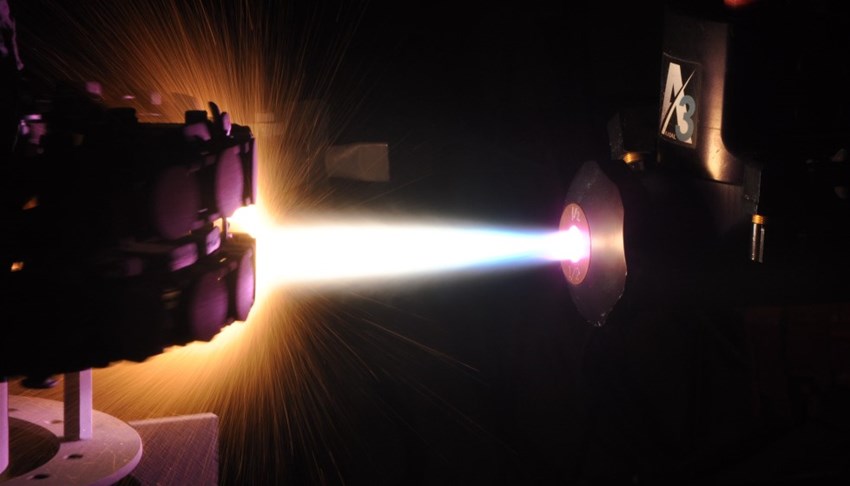
Industry partners and researchers will investigate new ways of using thermally sprayed coatings to contribute to more sustainable products. Photo: University West.
The project involves an extensive eight-year research programme. The aim is to establish a robust knowledge platform where researchers and industrial partners develop advanced coatings for a wide range of applications.
“Many industrial companies are looking for new solutions to reduce their climate impact and adapt their production to increasingly stringent requirements for resource efficiency, emissions and circularity.
“One way of meeting these requirements could be to replace existing materials with better, more expensive ones. But that is not always the optimal solution. In this project, we will investigate new ways of using thermally sprayed coatings to contribute to more sustainable products across different industries,” says project manager Mohit Gupta, Associate Professor in Thermal Spraying.
More efficient use of resources
The project comprises five subprojects, all aimed at developing solutions in which coatings contribute to higher resource efficiency, a reduced climate footprint and improved performance.
“This could involve, for example, finding alternatives to materials that are carcinogenic or have become considerably more expensive due to geopolitical tensions. Another challenge could be finding effective ways to repair a worn component instead of manufacturing a new one.
“The project will also examine how the transition to new technological solutions can be managed efficiently and sustainably in different types of organisations, and how sustainability and cost-benefit analyses can provide a basis for decision-making.”
Industry partners from across the value chain
Twelve national and international industrial partners will actively participate throughout the project. The companies represent the entire value chain, from manufacturers of feedstock materials and thermal spraying equipment to end users of the technology in a range of industries.
“We have collaborated with several of these companies in previous research projects. Most of them already have experience of thermal spray coatings in one way or another.
“After months of intensive preparation, we have now formed five teams of researchers and industry representatives for the different subprojects and defined their areas of focus. The teams have recently begun work on their respective subprojects.”
Focus areas
- Thermal barrier coatings to improve efficiency and enable the use of alternative fuels in gas turbines and maritime combustion engines.
- Environmental barrier coatings for lighter and more efficient gas turbines, helping to reduce carbon dioxide emissions.
- Protection against wear and corrosion through coatings that extend the service life of components.
- Repair of expensive components by recoating worn parts several times, extending component life and, in some cases, achieving better performance than the component had in its original condition.
- Circularity, including remanufacturing components and recycling/reusing feedstock materials used in thermal spraying.
- Effective management of the transition to new technology, including how new technology is implemented within organisations and the challenges that may arise along the way.
- Environmental sustainability and cost-benefit analyses to support assessments of the effects and facilitate implementation.
An interdisciplinary research project
“This project is special because it is interdisciplinary. Researchers in Production Technology and Work-Integrated Learning will work together on the same issues, but from different perspectives.
“One challenge is that the partners have slightly different wishes and expectations regarding what the project can deliver. At the same time, the companies will benefit from the large network and draw inspiration from each other’s ideas and experiences. This is a really exciting project that other industrial companies will also be able to learn from.”
-----------------------------------------
The ReCoat project is funded by the Knowledge Foundation (KK-stiftelsen) and runs from 2026 to 2034.
The participating companies are ABB, Alfa Laval, Everllence, GKN Aerospace, Höganäs AB, Mettech, Paroc, Pratt & Whitney, Siemens Energy, Thermal Spraying & Engineering (TSE), Traton (Scania) and Volvo Penta.
The project is conducted within the Primus research environment, where the focus is on combining cutting-edge research in Production Technology and Work-Integrated Learning.
Read more about the project: University West – ReCoat – Towards Resource Efficient and Sustainable Industry through Coatings.
Contact: Mohit Gupta, Associate Professor in Thermal Spraying, University West.
At University West, we conduct research in collaboration with the surrounding world to create a better future.